



6 Tips for the Big Game from California’s Water Saving Playbook
Find more ways to help conserve around your home
September 12, 2023 | Sacramento, CA

Here in California, we have much to be proud of, from our beautiful landscapes to our winning football teams. As you get ready to cheer on your favorite team this weekend, don’t forget these water-saving plays that will ensure you make the roster of California’s water conservation all-stars.
Wash full loads of laundry. You gotta show off your pride with your jersey! As fans prepare to wash and wear their favorite jerseys, make sure to fill the washer with a full load to save water.
Defrost frozen foods without water. When prepping items for your BBQ or meal, avoid wasting water and let your frozen food defrost overnight in the fridge instead of under running water in the sink.
Rinse veggies and fruits without running the faucet. Fill a large bowl or pan with water to rinse vegetables and fruits for snacking rather than running the tap. The water in the bowl can be reused in your garden or to water indoor plants around the house.
As Californians face a hotter, drier future, let’s come together as a team to do our part and conserve water now. Even after the final quarter ends, Save Our Water encourages you to stay on the offense when it comes to reducing your water use
For more ideas on native plants, yard transformation, and finding your local water agency, visit saveourwater.com
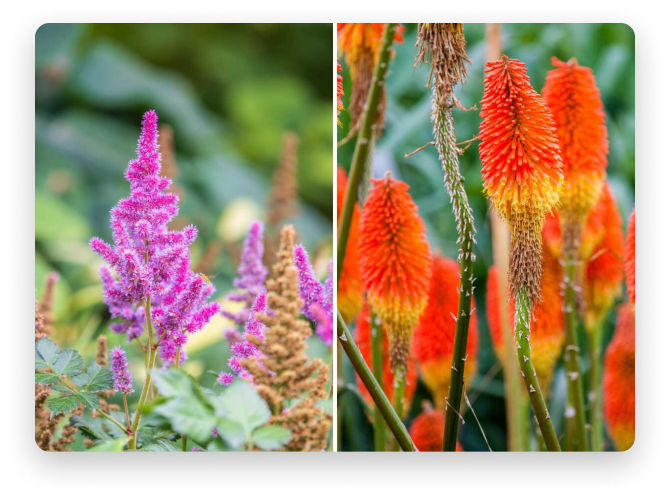

Swap Visions with Red Hot Pokers
Bathroom
You might think more guests staying in your home means more water use. But there are so many great ways to keep your water use low!
- Check your home, such as faucets and toilets, for leaks before holiday guests arrive and make any necessary repairs. Leaky faucets and toilets can waste 10,000 gallons in just one month!
- Consider installing faucet aerators or low-flow shower heads which can drastically reduce water use at every use. Using a water-efficient showerhead can reduce water use by up to 50%.
- Consider upgrading to a high-efficiency toilet or washing machine, which can drastically reduce water usage in the home year-round.
- Consider adding compost and mulch. This will help the soil retain moisture and control weed development. Adding 2-4 inches of mulch around trees and plants goes a long way to help you save water!
- Watch the weather. There is no need to water plants during the rainy season. Check your irrigation system controller, as it may have a built-in mechanism to turn off once a certain amount of rain has fallen. This will not only prevent the overwatering of your grass but will also save your water costs.
- Go with a rain barrel. Rain barrels gather rainwater so that you can repurpose it for your plants and yard. Rainwater is also one of the freshest, cleanest sources of water available!
- Check how much water you’re using. Place a jar near your sprinkler or irrigation system to measure the amount of water delivered to your yard; this will help you choose whether to reposition the sprinkler or turn it off.
- Watch where your water goes when you use it. Your sprinkler system can be easily adjusted to avoid the sidewalk or driveway, directing resources to where they are most needed: your yard!
- Only prune when it’s required to shape a plant or get rid of unhealthy or dead areas. If done incorrectly or during the wrong season, pruning can harm the plant’s health, structure, and aesthetics. Be sure to learn about your plants and trees’ ideal pruning season and techniques.
Cool Season Selections
Water-wise plants are a good idea year-round, but some selections really thrive in the fall:

Monkey flowers are the first and fastest to respond to cooler days and will blossom right away because they have recently emerged from their summer slumber. When combined with the dark green foliage, the yellow, red, or orange blossoms create a riot of color.

Butterweed (Plant): Butterweed has attractive silvery wispy leaves with strikingly contrasted yellow daisy flowers and is best grown in groups or combined with perennials. It typically blooms intermittently throughout the year, but it is one of the first surprises of fall after a difficult, dry summer.
Sky Lupine (Flower): Being a part of the legume family, Sky Lupine’s roots have unique nodules with bacteria that fix nitrogen, allowing it to grow in soils with low nutrient levels. By planting Sky Lupine between November and January, you can expect a late winter to early spring bloom brought on by winter rainfall.
“Starting with succulents is a great way to replace plants that require a great deal of water.”
Linda Harrington
Master Gardener, Compton Community Garden

Learn about the beauty, ease and scalability of water-wise yard and garden solutions at our booth in San Diego County Fair, Alameda County Fair, California State Fair and the Big Fresno Fair.